
ARCHIVE CONVERSATIONS·🇦🇷 Argentina · Ariel Aguilar, Bitcoin educator·Recorded · addendum
Thirteen zeros.
A tool to survive.
Argentina cut thirteen zeros off its money in 22 years and in 2001 locked every bank account in the country. Ariel Aguilar was sixteen. He tells what it was like at home, and why bitcoin became a tool to survive.
About Ariel
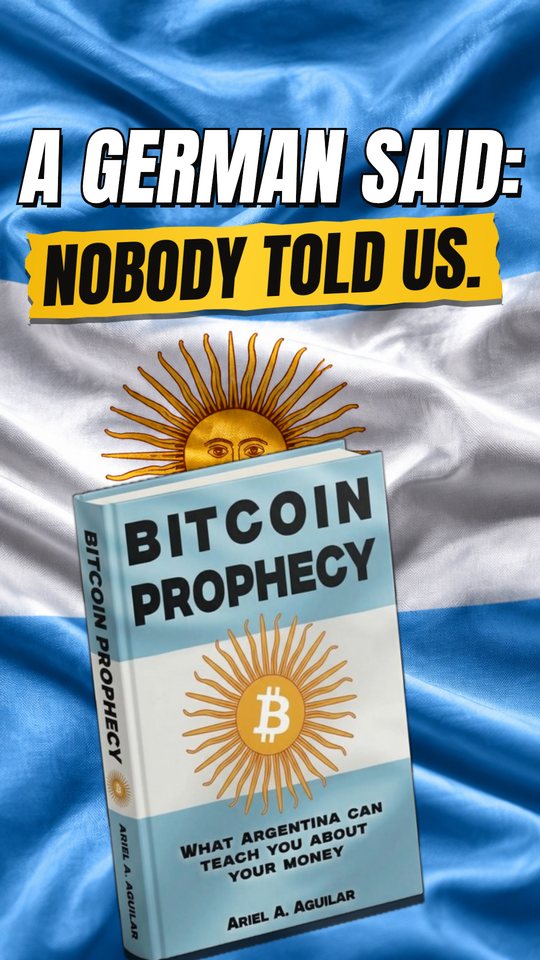
Ariel Aguilar is an Argentine Bitcoin educator and the author of Bitcoin Prophecy: What Argentina Can Teach You About Your Money. He was born in 1985, the year of the austral, and was sixteen when the corralito froze the country’s bank accounts.
A bitcoiner since 2013, he gave bitcoin talks at Argentine universities from 2014 and was one of the drivers of the Bitcoineta, a van that taught bitcoin across Latin America and more than twenty countries in Europe. In this conversation he answers the six questions every Archive Conversation asks. Three days later, after a bank in Paraguay failed to open, we called him again; that addendum is part of the episode.
The book
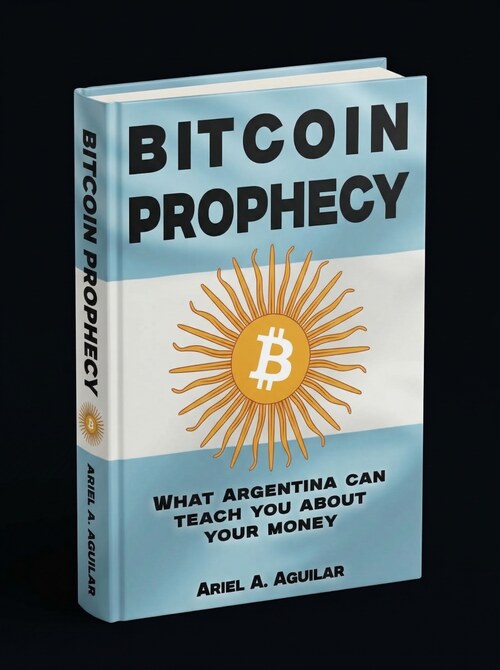
By Ariel Aguilar
Bitcoin Prophecy
What Argentina Can Teach You About Your Money
The book behind this conversation: a century of Argentine money, the corralito, and what it means for anyone’s savings, written by someone who lived it. English, Spanish and Italian editions.
What was said
- 01:10Q1 · Five currencies. The banknotes, oldest first: the peso moneda nacional, a new currency destroyed in two years, the austral, hyperinflation in 1989 and the peso tied one to one to the dollar.
- 05:00Q1 · The bank closes the door. The country risk on the morning news, a law that promised deposits were untouchable, and the corralito: 250 pesos a week.
- 08:12Q1 · A country without a president. Pots and pans on the balconies, the helicopter on the roof of the Casa Rosada, five presidents in two weeks, the default, and dollars turned into pesos.
- 14:38Q1 · Where Argentines keep their money. Houses paid for in cash, savings kept at home, money changers on every corner and a black-market dollar.
- 18:26Q2 · When bitcoin arrived. A libertarian party started on Facebook, a gold bug who changed his mind, and bitcoin as a way to move money past the currency controls.
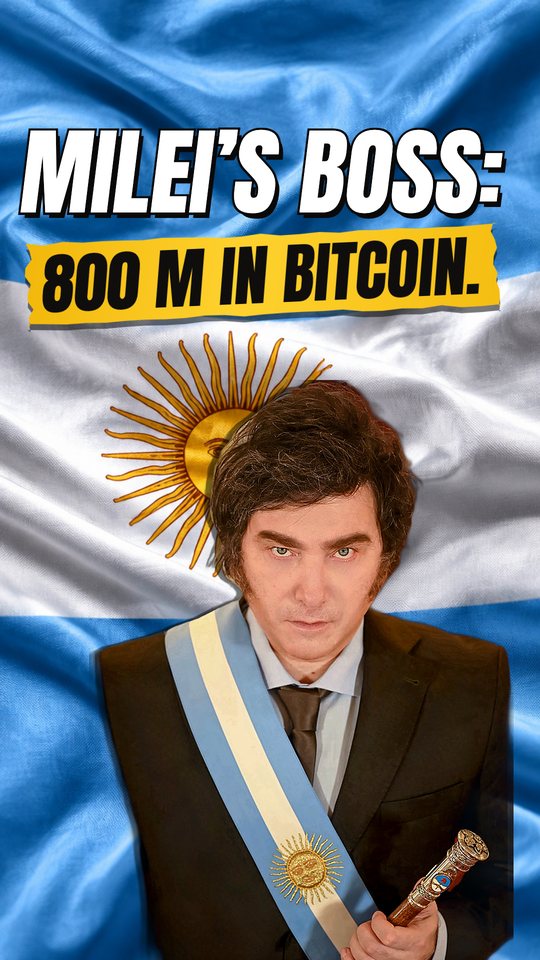
- 20:42Q3 · The state. A 2014 Facebook chat with Javier Milei about buying bitcoin, CoinX and $LIBRA, a bank that allowed bitcoin for a day and a half, and the pension funds the state took.
- 26:43Q4 · The ones who stayed. Bitcoin talks by rented car, an NGO the courts did not understand, and the Bitcoineta across Latin America and Europe.
- 27:52Q5 · Today. Few shops take bitcoin, money changers take everything, and la maquinita, the money printer, never stops.
- 32:20Addendum · The bank that didn’t open. Recorded on 6 November 2026. While we recorded this conversation, Paraguay’s central bank shut down ueno bank. Three days later Ariel compares it with the corralito and with Silicon Valley Bank.
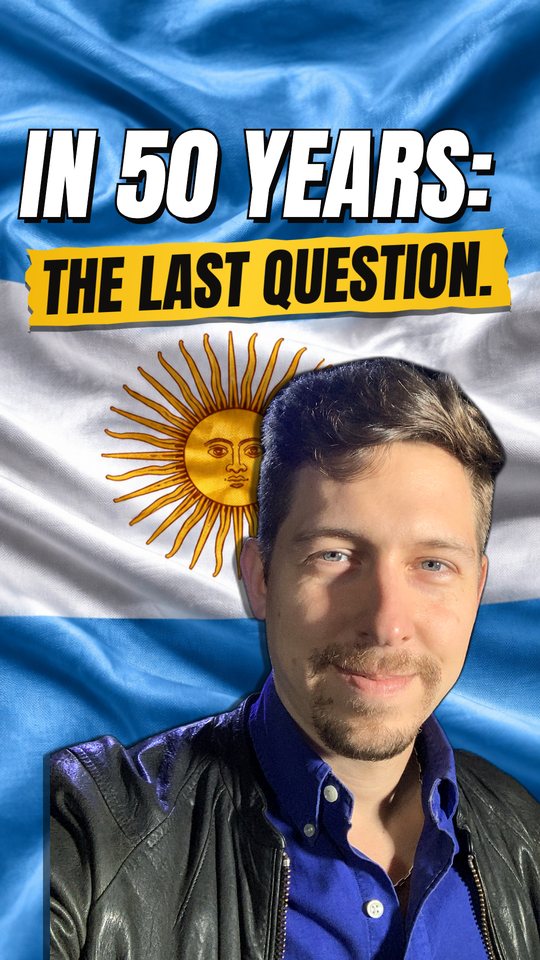
- 38:21Q6 · The last question. A message for someone opening this recording in fifty years.
- 38:49Closing. Visit Argentina once, and where to find the book.
Short clips
The record: Argentina’s money
- 1881–1969The peso moneda nacional, Argentina's longest-lived currency.
www.mdzol.com - 1970–1992Four new currencies and thirteen zeros removed: peso ley (1970), peso argentino (1983), austral (1985), peso (1992).
www.mdzol.com - 19–20 Dec 2001State of siege after the corralito. 39 people are killed across the country; President De la Rúa resigns and leaves by helicopter.
www.jornada.com.mx - Sep 2014Ariel gives bitcoin talks at the Universidad Nacional de Cuyo: “the best money humanity has invented so far”.
www.unidiversidad.com.ar - Jan 2015Bitcoin Argentina’s first talk of the year at Espacio Bitcoin in Buenos Aires, in the week bitcoin falls 38 %.
undergradresearch.northwestern.edu - 5 May 2022The central bank tells banks they may not offer crypto (Comunicación A 7506), days after Banco Galicia opened bitcoin trading.
www.marval.com - Mar 2024Law 27.739: crypto service providers must register with the securities regulator (CNV) or stop operating.
beccarvarela.com - 14 Feb 2025President Milei promotes the $LIBRA memecoin, which collapses within hours.
www.theblock.co - 14 Apr 2025Currency controls for individuals are lifted; the US$200 a month limit ends.
www.lagaceta.com.ar
Context shown in the video
This is an archive. Where the conversation needs a date, a number or a term explained, the video shows a card instead of cutting the guest. These are the cards.
- CONTEXTPeso moneda nacional · 1881–1969
- CONTEXTFalklands War · 2 April – 14 June 1982 · Argentina's military government lost · democracy returned in December 1983
- CONTEXTThe peso argentino arrived on 1 June 1983, still under military rule · Alfonsín took office on 10 December 1983
- CONTEXTPeso argentino · June 1983 → June 1985 · President Raúl Alfonsín replaced it with the austral
- CONTEXTAustral · 15 June 1985 · US$1 = ₳0.80
- CONTEXTRaúl Alfonsín handed power to Carlos Menem on 8 July 1989 · Five months early, in the middle of hyperinflation
- CONTEXTPresident Carlos Menem · economy minister Domingo Cavallo · Convertibility Law 23.928 · in force 1 April 1991
- EXPLAINERTether (USDT) · A dollar stablecoin: each token is meant to be backed by a dollar in reserve
- CONTEXTConvertibility · 1 peso = 1 dollar · Inflation: 84 % in 1991 → 0.1 % in 1996
- EXPLAINERCountry risk · The extra interest Argentina paid over US bonds, in basis points (100 = 1 %)
- CONTEXTLaw 25.466 · “Intangibility of deposits” · In force 25 September 2001 · the corralito came ten weeks later
- CONTEXTMonday 3 December 2001 · the corralito took effect · Economy minister Domingo Cavallo announced it on Saturday 1 December
- CONTEXTCorralito · Decree 1570 · 1 December 2001 · Cash limit: 250 pesos or dollars a week
- CONTEXTFriday 30 November 2001 · The corralito decree was signed the next day
- CONTEXTState of siege announced Wednesday 19 December 2001 · De la Rúa resigned and left by helicopter on Thursday 20 December
- CONTEXT39 people were killed across Argentina on 19–20 December 2001 · Human Rights Secretariat
- CONTEXTVice-president Carlos Álvarez resigned · 6 October 2000
- CONTEXTSenate leader Ramón Puerta held office 21–23 December · The default was declared by Adolfo Rodríguez Saá, chosen by Congress, on 23 December 2001
- CONTEXTFive presidents · 20 Dec 2001 – 2 Jan 2002 · De la Rúa → Puerta → Rodríguez Saá → Camaño → Duhalde
- CONTEXTDecree 214 · February 2002 · Dollar deposits converted at 1.40 pesos
- CONTEXTThe dollar peaked at 3.90 pesos · June 2002
- EXPLAINERCuevas · “caves” · Informal money changers: dollars for pesos, off the books
- EXPLAINERDólar blue · The street price of the dollar, next to the official one
- EXPLAINERMurray Rothbard (1926–1995) · American economist of the Austrian School · For a New Liberty: The Libertarian Manifesto (1973)
- CONTEXTCurrency controls (“cepo”) · from 31 October 2011
- EXPLAINERThe Austrian School of economics · Mises, Hayek, Rothbard · free markets and sound money, sceptical of central banks
- ACCORDING TO ARIELMilei was then chief economist at Eduardo Eurnekian's Corporación América
- EXPLAINERProof of work · Bitcoin's security: miners spend real energy to add each block
- CONTEXTDecember 2021 · Milei, then a deputy, promoted CoinX World on Instagram · August 2023 · Police raided CoinX in a fraud case
- CONTEXT14 February 2025 · Milei posted $LIBRA on X · It crashed within hours · he deleted the post
- CONTEXT23 October 2026 · A judge dismissed the criminal case · Prosecutors have appealed
- CONTEXTBanco Galicia opened bitcoin trading on 2 May 2022 · The central bank banned it on 5 May (Com. A 7506)
- CONTEXTPrivate pension funds (AFJP) nationalised · Law 26.425 · November 2008
- EXPLAINERLa Bitcoineta · A van that toured Latin America (2018) and Europe (2023–24) teaching bitcoin
- EXPLAINERUSDT · A dollar stablecoin issued by Tether
- EXPLAINERLa maquinita · “the little machine” · Argentine slang for the money printer
- EXPLAINERArbolitos · “little trees” · Street money changers calling “cambio, cambio”
- EXPLAINERBitcoin Prophecy · What Argentina Can Teach You About Your Money · Ariel Aguilar
- CONTEXTTuesday 3 November 2026 · Paraguay's central bank began the resolution of ueno bank · About 3 million clients lost the app, their cards and the ATMs overnight
- EXPLAINERueno bank · A Paraguayan digital bank: an app, cards and ATMs, no branches
- CONTEXTAbout 6 in 10 adults in Paraguay had an account at ueno · CriptoNoticias, 4 Nov 2026
- CONTEXTProsecutors are investigating the bank's directors · no one has been convicted · They asked for pre-trial detention for Miguel Vázquez and house arrest for seven directors
- CONTEXTThe central bank said ueno's solvency ratio was below half the legal minimum
- CONTEXTDeposit Guarantee Fund · up to 75 minimum wages per depositor (≈ US$38,000) · Covers about 97 % of savers · amounts above it are not guaranteed
- CONTEXTMarch 2023 · US regulators covered every Silicon Valley Bank deposit · including the money above the $250,000 insurance limit
Full transcript
Read the whole conversation (5,718 words)
Q1 · Five currencies
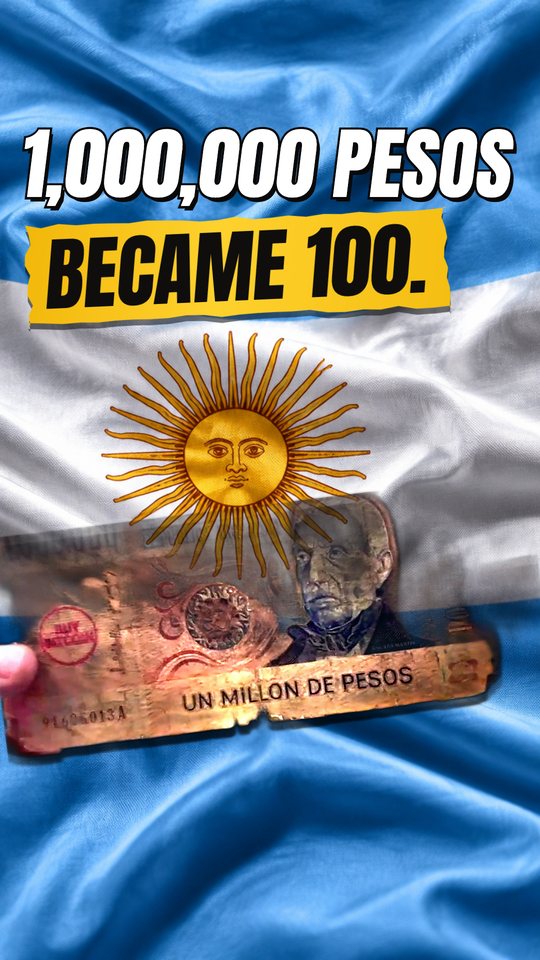
01:14 Ariel This went from 1881 till 1970. Almost 90 years. Through some years, it had gold backing, but it went on and off. Until we had the first national central bank in 1935. And ever since we've been devaluing and taking out zeros. So we took two zeros out of this one. So 100 pesos of this became one of the next one. And the next one is this one. Called Peso Ley in 1970. So this one went into hyperinflation because in year 82, we did a war against Britain. Because of the Falkland Wars. And they printed money to pay for the war. So people actually started paying. Let me see if I have it here. With the biggest denomination one, which was 1 million pesos. So people were paying with 1 million pesos notes.
02:08 So this experiment of doing the war failed. We lost the war. So then with that, democracy came back. Were in military dictatorships back then. So the next president, he decided to make a new currency. He took out four zeros out of this. So one million became 100. And it's really similar, the next bill, to this bill, right? But now it's called Argentine Peso.
02:37 So, so far we have removed six zeros out of the original bill. So this is more patriotic. So this same president, he became, you know, he, he came up with this plan called the Austral Plan. And Austral means from the South, right? And when the, so what they did is take out three zeros. So 1 ,000 pesos Argentinos became one Austral, right? In the year 85. And at first this was more valuable than the dollar. Like you could buy a dollar with 83 cents of an Austral.
03:13 Okay. So how long did it took us to go into hyperinflation again? So 89, we had hyperinflation again, like in the year 89 and before, of course, there were stories that you would go to a supermarket. And when you grab the thing from the shelf, it will have one price. And there will be a guy chasing you with a, with a gun to, to staple prices, right? To change the price before you, before you go to the checkout. So that was how crazy the hyperinflation in Argentina got.
03:46 So this president called elections in advance to leave office to give the hot potato to the next one. And so the next one came. He was a Peronist. Well, but this president, he had this idea with the Ministry of Economics. They did sort of like a Tether, like a USCT. It was called Peso Convertible, which is convertible peso. And they did a law, the law was really small, like two pages long, that said in order to print a peso, you need a dollar at the central bank or you need a bond at the central bank. So it's like Tether, right? This is actually pretty rare because it's like number 58 ,000 of the A -Series. So they had printed less than $60 ,000 when they printed this bill over here. So this in the year 91, This is the only time in Argentina where we had some sort of stability. Like inflation stopped. And for almost 10 years, we had almost 0 % inflation. Right? Like, yeah, stable prices. That's what I grew up with. Right? For me, I was a child. It was normal to me.
Q1 · The bank closes the door
05:05 Ariel I remember every morning I would go to high school and I would turn on the TV. And they would tell me what the weather was going to be for the day. And also what the country risk rate was for the day. Right? So we knew that the end was near. Right? It was coming. And it did. Right. So what happened there was that some people were like into the news and into economics.
05:34 But still, not enough people understand economics. Not enough people can understand what's coming. My mother told me the other day because we talked about this. A few months prior, they enacted a law that was called the Intangibility of Deposits Law. Like a law that would guarantee the safety of deposits. And my mother told me when I saw that, I knew that they were going to take the deposits away. Like, because politicians do the opposite of what they say they're going to do in Argentina.
06:08 And this was announced months prior to this season of the deposits, which was called corralito. Corralito is a little coral, like where you put the animals inside. Or in Spanish, you can also put the baby in the corralito. So the crisis got so bad, the recession got so bad, that one day, they announced on a Monday, that they made sort of like a CBDC experiment. Because they trapped everybody inside of the banking system, like totally in the nose, right?
06:43 On a Monday morning, they said, okay, all your money now is trapped inside the bank. Like if you had $100 ,000 in the bank, it will allow you to withdraw $250 per week, right? Like enough for you to live the most basic life. And I have this story from my mother, because one of my sisters, she worked as an auditor in a commercial bank. She heard the rumors about this. So she called my mom. My mom was like, I don't know, the hairdresser. And my sister said, go right down to the bank and withdraw everything you have, right? So my mother said, well, no, no, do it now. Go now.
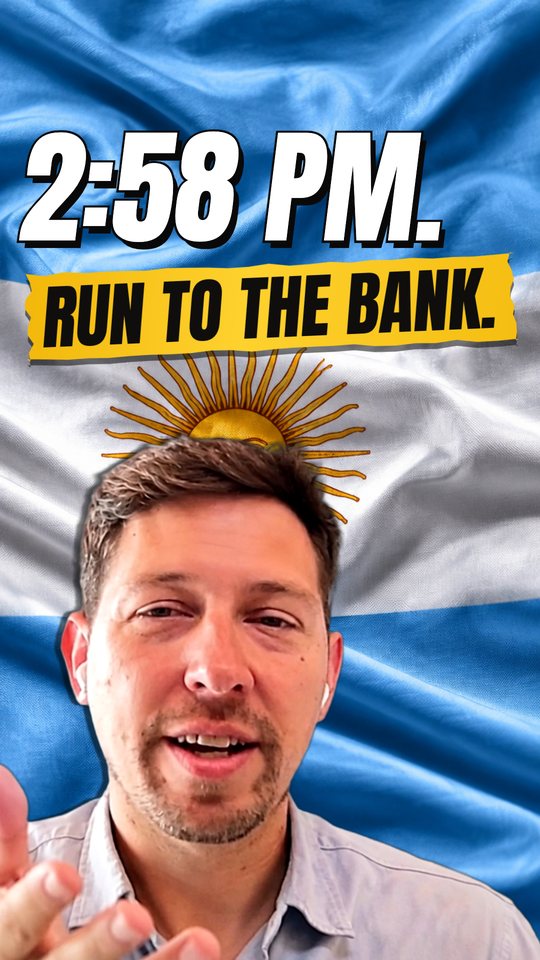
07:26 She went to her local branch and And she had to withdraw like a five -figure sum, right? And they said, okay, we don't have it here. But you can go to the main branch in downtown Buenos Aires, the headquarters, and they will have the money there, right? Okay. So my mom went into the bank at 2 .58 p .m., like two minutes before the closing of the bank. There was a lot of people because the rumor had spread. This was a Friday. That on Monday they would impose these restrictions.
07:57 So whoever got inside before 3 p .m., the bank tellers would pay, right? They would shut the door. They would do a line. So they kept on paying people until 8 p .m. That day. And my mom was able to take everything with her.
Q1 · A country without a president
08:17 Ariel People started rioting in 2001 because of this corralito. We developed this protest, which was called cacerolazo. Cacerola is the pan where you cook, the aluminium or whatever, steel pan. So people would take this pan and heat it with a fork or with a spoon or whatever. It would make clanking noises. So you would go to the balcony, start making noise. Then your neighbor would start following you. And then the building next door would start doing it. And pretty soon the whole city was clanking, right? Clanking, making noises. And this was the method of protest. Every day there was protest like this to show how much we disliked the government and what we was doing. Then the riots started happening. You would see images of elderly people going to the banks and hitting the windows or the curtains. And the banks had to buy steel curtains to block off the entrance, install them really quickly. Then we started having looting. So people going to the supermarkets and taking everything from the supermarkets. My mother was telling me, don't go outside because it was chaos. And then the president was went to a national TV to address the country and he said, okay, I'm going to install a curfew, a state of siege at night. I don't remember if it was like 9 p .m. Or 10 p .m. Up until like 5 a .m. The next day. You're not allowed outside. And he was suspending the constitutional guarantees. So when people heard that on a Thursday at 8 p .m., people went even crazier. So on Friday, they rioted even more. They rioted in the main square in Buenos Aires. This president took out the police and the military on horses, started hitting people, retaliating. And around the city, like 20 people died during the protest that day.
10:32 So the people started surrounding what is our White House. It's called the Pink House. It's pink. Right. And then we saw the famous image of a helicopter landing on the roof of the Pink House. And the roof doesn't have a helipad. It's not prepared for landings. We don't even know if it could sustain the weight of a helicopter, but it did. Right. And we saw that they took him by the arm and took him inside of the helicopter. And he had resigned. All
11:02 People around were surrounded and buoyed him to go. The thing was that when the helicopter took off and we didn't know where it was going, the country became headless without a president because we did not have a vice president. The vice president, because he saw the crisis coming, he also fled like months prior. He resigned and said, I don't want to deal with this. Right.
11:30 So for a few moments or hours, we didn't have a president. Then they saw, okay, the Constitution says that the next one in line is the president of the Senate. So they gave presidency to this guy. This guy went, he had like an inaugural speech at Congress. He became famous because he declared that Argentina was declaring default, like we are not going to pay our debts any longer.
11:57 And all the deputies and senators that were in the room started cheering, like, Argentina, Argentina. Like if we had won the World Cup, right? Like we were champions of defaults. We have defaulted many times. So that president lasted like less than two weeks in office. So he resigned. They started like, we had like five presidents in two weeks, right?
12:28 Up until they reached the opposition party leader, Dualde. And Duarte also, in his inaugural speech, also had a famous saying that was, whoever deposited pesos will get pesos, whoever deposited dollars will get dollars. Do you think that promise kept true or not? Exactly. So everybody got pesos. The dollar balances in all the banks of Argentina went to zero. So if you had a million dollars for the bank, it would show up like zero, right? But they would create magical new pesos, right? So they chose an exchange rate of 1 .4 pesos per dollar. And they finished the convertibility. So this peg between the dollar and the peso got finished. I remember like my way of measuring prices was like a McDonald's cheeseburger. Right? So McDonald's cheeseburger was one peso, one dollar, 99 cents for 10 years. And then I went to buy a hamburger and now it was two. So it doubled in one day. Right? I needed two pesos in order to buy the hamburger. So I was, everybody was 50 % lost half of your money, right? But the exchange rate of the black market or the markets went very quickly. It went to four pesos per dollar. So a 75 % evaluation, just like that. So like I said, if you had a million dollars, it would go to zero. They would create 1 .4 million pesos. And if you wanted to take those 1 .4 million pesos and buy back dollars, you had to go to the market and they would sell dollars at 4 pesos per dollar. So that would become $350 ,000, right? So everybody got like a 65 % cut and lost everything. In that crisis.
Q1 · Where Argentines keep their money
14:43 Ariel Have a very big cash culture in Argentina. Even to this day, we, like people, when they buy a house, you know, it's $200 ,000, $500 ,000, whatever amount, even a million dollars, you have a big pension or whatever you would pay in cash. So somebody brings a suitcase, right. Or you actually can make the dealing inside of a bank. The bank will lend you a room for you to come with a notary. They will give you a counting machine and the buyer and the seller. We're going to count a million dollars on the table, check the bills. Right. They're good. The notary will write off the transaction as, uh, as being well done. So, and,
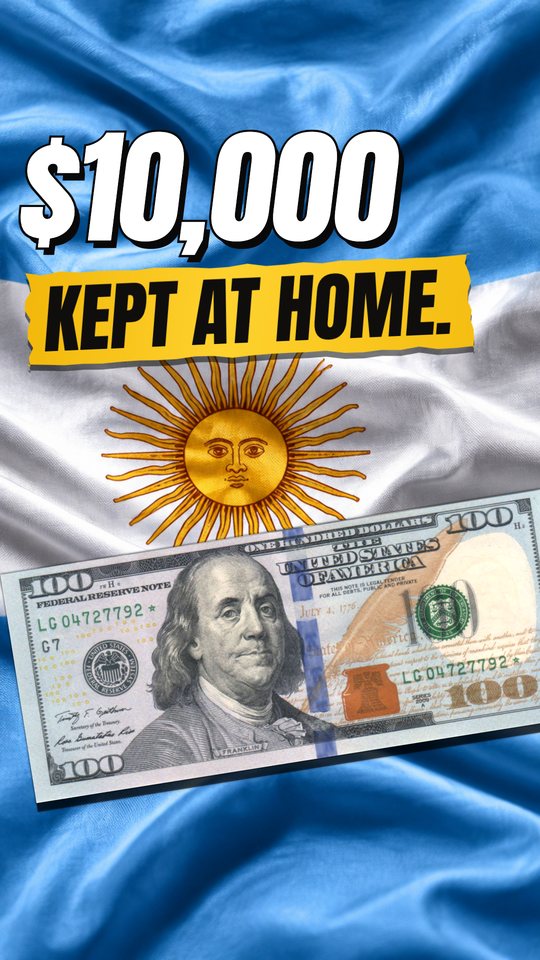
15:25 And what, because of what happened in 2001, people have developed, uh, a distrust for banks and people don't leave their savings in banks. Like if an Argentine has, I don't know, $10 ,000, $20 ,000, $50 ,000, he won't leave it at the bank. Right. Perhaps companies, because they're forced to using banks might leave their dollars at the bank. Uh, but otherwise people withdraw it, uh, stuck in their homes, uh, and they deal in like a private banking system. Like, uh, uh, we call it Cuevas caves. It's like offices inside of buildings or even like any shop could be a cave. Um, it was really common back then. And even now that travel agencies would be like, uh, an underground bank, uh, right. Or I have exchanged. They also do money changing, right. They do changing dollars to pesos, pesos to dollars. And you can go into an antique shop and the real business of the antique shop is selling pesos and dollars. Uh, even once I went to exchange currency to the guy that, uh, copies your keys, like the locksmith. So that guy, the cop is the keys. He, he also runs a money exchange. Right. Uh, so Argentines are used to this. It's totally normal for us. That anybody can be a money changer. Uh, some politician even joked a few years ago that you have to save in tuna cans and he will show up with a whole stash of tuna cans behind him. Right. Uh, that's, that's the way Argentines have found to survive. Then we, we've developed a black market price for the dollar. So we had whatever the government said, the dollar was worth and what the market really said was worth. And you could have a gap of 50 % difference. Like the government could say, Oh, it's eight pesos per dollar, but the market would say, no, it's actually 12. Right. Right.
17:30 And at first this gap, you, some people could take advantage of the gap, right? Because if somebody is selling you dollars at eight pesos, you can pay eight for that. But then you go to the black market and somebody will pay you 12 for that. You just made 50 % extra money in two hours. So there were crazy stories like people, they would use their credit cards, right? They would just take a one hour trip to Uruguay on a boat, go to a casino, buy casino chips with a credit card, immediately cash the casino chips for dollars cash, come back with a boat, with all the cash with them, go to the black market, sell the dollars for pesos, go to the bank, pay down the credit card, right? And repeat and repeat and repeat. Every time you do it, you make 50 % of your money, right?
Q2 · When bitcoin arrived
18:30 Ariel All right. So thanks to my father, I became a classical liberal at first and then a libertarian. Reading like the Murray Rothbard, yeah, libertarian manifesto. And then we had Facebook and somebody, it was not me, somebody made a Facebook group around 2009 that said, I want a liberal political party to be formed in Argentina. That was the name of the group.
18:59 But I was a gold bug. I thought the only alternative to the dollar was gold or even silver perhaps. And so, yeah, I was a fan of gold, like many libertarians. But somebody inside of the party, he heard about Bitcoin. He became a Bitcoiner. He came to the party and proposed, let's take donations in Bitcoin. And yeah, like the rest is history. Like eventually it took me some time, but I bought my first Bitcoin and I started talking to my friends about it, people from college.
19:32 And yeah. And then one year later I was teaching about Bitcoin, right? I was giving talks and we sort of started trying to evangelize on Bitcoin. Like, because it was a tool for Argentines. It was a tool to survive. Like, like in the years, yeah, 20, since 2011, I think it was, Argentina really closed off the banking system from the rest of the world. So you, you couldn't send money overseas. It was so hard. And if you got money from outside into the country, they would pay you at the official dollar rate. So if you managed to get money from not using the banking system, like using Bitcoin, your money was worth 50 % extra.
20:20 And who doesn't want that, right? Do you prefer to get, I know, yeah, 150 ,000 or 100 ,000? You prefer 150 ,000, right? So, so that's why people started using Bitcoin really early on to send money overseas. It was typical, right? We didn't have USDT back then.
Q3 · The state
20:46 Ariel Sure. So what happened was that Milei, he was like a monetarist in Chicago style. I know he liked Milton Friedman, let's say, but somebody, a friend of him started giving him copies of Austrian economics, Murray Rothbard and Mises. He read all the books. So, okay. So then he became a libertarian. And the funny thing is that he added me on Facebook and he sent me a message saying, okay, thank you for accepting my friend request. Cheers. JM, right? Javier Milei. And I said, cheers. Then he started going to TV in like cable programs, TV shows, not on the main TV channels. And I saw some potential in him, right? I thought, okay, this guy might get into something. So by the end of the year, I sent him a private message saying, okay, Javier, how are you? I'm giving, I'm sending you this Bitcoin talk that I gave that is uploaded on YouTube. It's still on YouTube. It's like from, I don't know, October, 2014. It's there. I gave like an intro talk, like an hour and a half in a conference that was about technology. And I said, I think you're going to like it. Right. And he said, oh, that's so great. I'm really interested. Why don't you send me the presentation, the PowerPoint to give me his email, right?
22:08 And then is when I thought he was totally nuts, crazy. And I had always this suspicion that he was crazy because the first time I saw him in person, he was wearing like a dress shirt on top and a bathing suit underneath. So imagine he came to a gathering in a cafeteria, a coffee shop with many of us, many libertarians. And he would dress formally and ready for the pool.
22:34 So, yeah, we thought this guy is nuts. But then on the chat, he said, my boss wants to invest 800 M in Bitcoin. And in Spanish, M can be milles, which is thousands, or millions, which is millions, right? So I said, thousands or millions? He said millions of dollars, right? 800 millions of dollars. And that was like an impossible purchase to make. Like $800 million is, the Bitcoin price was like $400 per Bitcoin. So it would have meant like 2 million coins, totally impossible to buy 10 % of the supply of Bitcoin. Back then, perhaps we only had like 12 million coins in circulation. I really don't have the precise number, but something like that. So it was impossible to purchase. I told him this is going to move the market. It's impossible to do. He said, yeah, but my boss is somewhat impulsive. His boss was Ernekian, an Armenian, half Armenian, half Argentine, that owns a lot of TV channels and at the airports, many airports in Argentina. The boss was a billionaire. And I thought, okay, could be possible, but I kept on talking to him and I never followed that. I thought he was nuts. So I never sent him the presentation I never follow up on that a few years later whenever I encountered Javier, Javier was one of us he would come to the meetups not the Bitcoin meetups the Austrian economic meetups
24:10 So he would come and I would try to talk to him about Bitcoin and he would listen for two minutes and then he would say, yeah, I'm all in for private monies, right? He would do this and he would go. So he never went into understanding the inner workings of Bitcoin. He might know that it's a private money, but that's pretty much it, right? He knows that it's a competitor to the central bank and he likes that,
24:37 He doesn't understand why Bitcoin are not Ethereum, right? Or why not crypto? But he doesn't know why proof of work, right? Doesn't know proof of stake and such. It's a shame. But in Argentina, there was this CoinX that I don't remember what it was, but also he appears shaking heads with all the CoinX team and they wrecked everybody. And then you had the Libra accident.
25:06 Marek I don't know.
25:06 Ariel He promoted a coin to support Argentine entrepreneurs. And yeah, it lasted one day. They wrecked everybody. So yeah, so he's been burned by all the crypto experiences. Well, that was because a major, major bank called Banco Galicia, right? Like top tier bank decided on one day to allow you to buy and sell Bitcoin inside of home online banking.
25:42 That lasted like a day and a half because they went crazy at the central bank and they didn't want it. They didn't like it. And so, yeah, that's why they forbade. Because the Argentine government has a track record of stealing everything from the pension plans, right? Another thing that they did in the 2010s was that everybody had private savings, like 401ks, like we call it in the US. And because they needed money, they enacted a law taking everything from the state. You had a $60 ,000 save or $500 ,000 save in your 401k. Okay, now it's all part of the government. We're going to give you, whenever you retire, a state pension fund, right? A state pension, right? That sometimes, yeah, it's got nothing to do with how much you had, right? They scammed everything. So everybody, sorry. Typical Argentine stories.
Q4 · The ones who stayed
26:46 Ariel Like we would rent a car and drive to big cities in Argentina to give Bitcoin talks and come back. Right. Yeah. We call that like Bitcoin tours. The idea was to do an NGO, like a Bitcoin Argentina NGO. The justice system didn't approve of like that name, like, They thought, why do you need a foundation for something that seems profit? They didn't understand. So, yeah, eventually we did like a civil association.
27:15 In the year 2018, we did the Bitcoineta, the band. And we drove around Argentina in this sprinter band, teaching people about Bitcoin. And that band also crossed to Uruguay, South of Brazil, Paraguay, Bolivia, Chile. Yeah, we had many, many drivers. I was one of them. We did a sprinter band for Europe. And we drove around like more than 20 countries in Europe in 2023 and 2024. So we did almost two laps around the earth. When you count all the kilometers that we drove inside of Europe, like almost 80 ,000 kilometers driving.
27:50 Marek What was the
Q5 · Today
27:56 Ariel Very few places, I'd say. Perhaps even less than the first years of Bitcoin. We were really excited and there were some shops. But it's hard because I remember there was a subway, not the underground, but the sandwiches places that would take Bitcoin payments. Right. So right now it's pretty scarce. But what we do have a lot is these caves, the cuevas, the money changers. At first, there were very, very few that would buy or sell you Bitcoin. Then they started using USDT. When USDT became popular. Then during the pandemic or after the pandemic, traditional cuevas have for decades been only been dealing with peso dollar. Now they're also selling or buying USDT. Right. Or they use it or whatever to pay themselves.
28:54 So that's more common. So somebody that wants Bitcoin. You will go to one of the square bus. Found out cash. Get USDT. Then they will go to an exchange or whatever. They will find a way. And then they will buy the Bitcoin or the Ethereum or whatever they want to buy. Yeah. And put it in their hardware wallet. That's pretty much the way it works in Argentina. Like, yeah. Everybody deals in cash. They're used to it. Exactly.
29:27 They understand that the money printer that we have, we call it a La Maquinita, which is a tiny machine. Right. You have an expression that is like cranking the crankcase of the machine, which is that we're going to paper the whole country with paper. And everything is going to devalue. And we're going to go into hyperinflation. And we have to survive. Right. So it's the dollar. It used to be the dollar. Now we have Bitcoin.
30:01 And we have caves in order to survive. Right. And there are these guys which are like, if you come to Buenos Aires, there's like a main street that you can walk. Florida street where we have arbolitos, which are called tiny trees. These are the guys that are calling, shouting, cambio, cambio, cambio. Exchange, exchange, exchange. Right. And you approach them and they would ask you, okay, what do you want to change? I know, $500. Okay. This is the change rate. Like it? No, no. You negotiate on the street. Right. And yeah, if you like it, they will walk you 50 meters to a leather jacket shop. Right. So the guy is selling leather jackets and he's also a main changer. Right. So the tiny tree, the arbolito, will walk you to the cave.
30:50 And you exchange. And that's actually how I got the idea to write the book. I'm going to show you here to guys. It's called Bitcoin Prophecy. Right. What Argentina can teach you about your money. And the idea to write this book came in a Munich meetup in Germany. The meetup was supposed to be about Bitcoin, but for two hours, we only talked about Argentina. And at the end of the meetup, one of the Germans, he said to me, nobody told us this, right? About Argentina. Like the news about Argentina, they don't reach Germany. Right. We didn't hear about the corralito, the 2001 crisis and all that. And I told him, okay, this was November, December 2001. He said, oh, perhaps it's because of the 9 -11 attacks back then. And we were more focused on the US. Right. Then I realized, okay, Argentina's history is crazy history, like economic history. You can derive a lot of teachings and lessons as to why the world desperately needs Bitcoin. For somebody in the first world, like in the United States or Europe, they think everything's okay. And they May not realize why we need Bitcoin. Right. So I thought, okay. Perhaps if they know what's going on, the shit show that's going around in the rest of the countries, they will see the need for Bitcoin.
Addendum · The bank that didn’t open
32:26 Ariel Well, for me, it was crazy that when we record the episode, we set up a date of Tuesday, day, 10 a .m. And that was the exact time when ueno bank in Paraguay collapsed or didn't open its doors. So it was funny that we recorded an episode about bank seizures and failings and corralito, which is everybody being trapped inside the banking system. And at that very same minute, it was happening in Paraguay. It was hilarious. And SAB, of course, at the same time.
33:01 So what happened was that ueno bank is like a new bank. It's like fintech, new bank. It didn't have branches. But it managed to get bank accounts to over 50 % of all the ovals in Paraguay. And it had a meteoric rise because it's a new bank. It's from 2023. So it's a pretty recent bank. And now there's like a political scandal, upheaval in Paraguay. People were locked out of their bank accounts. Like imagine like online banking not working, the app not working, the debit credit cards not working. It was even worse than the Argentine experience. Because at least the Argentines somewhat prepared for what was coming and kept the system going just with restrictions. But it can happen to you. I mean, one day you find out that the bank won't open its stores, the employees can't go in, and so on, right? So many, many adults couldn't use their money.
34:01 There are like corruption accusations that the bank was taking, well, of course, people's money, but lending it out to companies that were related to the owners of the bank. Like it's the perfect business, right? Imagine you set up a branch, a bank, a private bank. You take money deposits even from the state. So there were pension funds from the state, money from some ministries, put millions, hundreds of millions of dollars into the bank. And then you siphon that as a loan to your own private companies. And the reason why they decided to close the bank was because it was, the banks have, each country sets a limit on how much the reserve needs to be. It could be 10%. Like you can see $100 ,000 in your bank account, but the bank is only holding $10 ,000 out of that. $90 ,000 of your dollars, they're loaning it out to somebody. I think that in the case of ueno bank, the regulations was like 12 % and they had like 6%.
35:03 This will have repercussions because how can now Paraguayans trust the other banks? There are tales that people are fleeing to other banks just in case to take their money out of that. The Central Bank of Paraguay is in a better condition even than the Central Bank of Argentina. It has like about 11 billion cash reserves, billion reserves. So there's a depository guarantee of up to $38 ,000. So most people in Paraguay don't have that amount. Like 98 % of all the clients in the bank will get their money back. Imagine that Paraguay is only a country of 6 million people. So it was like 60 % of all adults had a bank account in ueno bank. It May not be the main bank account they use. They could use many bank accounts, but a lot of people were affected by this. And people who only had this bank account, okay, now they couldn't pay for the food. They couldn't pay for travel or paying employees. So everything starts breaking down when these situations happen. And you have consequences that spread, right? A cessation of payments.
36:14 So yeah, with Bitcoin, you don't have these problems. We don't have fractional reserve. Of course, you always have to pay attention to what exchanges can be doing behind the scenes or actually exchanges, but in case that you decide to be your own bank and decide to hold your own keys, well, then now it's your responsibility, not someone else's.
36:35 So know that it can happen to you. The banking system is designed to be this way. It's embedded in the design. Well, now that I see what Paraguay has done, it seems that corralito was somehow better managed because, yeah, it was like a previous step before total collapse. Like people could still use their debit cards and credit cards to make payments of whatever amount you chose and only the withdrawals of cash were limited up to 250 pesos per week. In the case of Paraguay, everything went black. Everything went shut down, nothing working, everything breaks. I guess they don't get that it can happen to them. I mean, you think that the banking system in the U.S. Is different or in Europe. It's not. I mean, it's all the same. It's designed the same way. In the case of Silicon Valley Bank, and there was another one.
37:47 Like if they have to pay over the insurance deposit fee, which was like $250 ,000, they decide to print money. And that's a way to socialize the losses. So everybody pays for that. It's a way to do communism, socialism with the losses or the mistakes of the banks. So everybody gets saved, right? You have to find a way to survive this design. It's the way it's made. And Bitcoin is the way out.
Q6 · The last question
38:21 Marek The last question, I ask it to every guest. If someone opens this recording in fifty years, what should they know about what happened here?
38:30 Ariel I think Argentina, for a person listening to this in the future, they will see a very rich and prosperous Argentina, a country that, because it's so behind right now, it's easier to come back up.
Closing
38:50 Ariel Perhaps I would say people can visit Argentina, at least once in your lifetime. I know it's very far away. But I dare you to try. I dare you to enjoy the Argentine beef steak, the asado, the barbecues. It's a way of life here, carnivore style. So yeah, thank you, Marek, for the invitation and people, whoever is interested, you can get the book on Amazon, Become Prophecy. It's also translated into Spanish, Prophecy of Bitcoin. This is an Italian version of the book. You can follow me
39:23 Marek Me on X.
39:25 Ariel The best place is on X. It's my name. It's at Ariel Aguilar. Aguilar is A -G -U -I -L -A -R. So yeah. My website is my name also. ArielAguilar .com So thank you very much, Marek, for the interview and being invited. It was a pleasure to talk.
Transcript of the published cut, with names and terms checked against the recording. The video is the primary source.